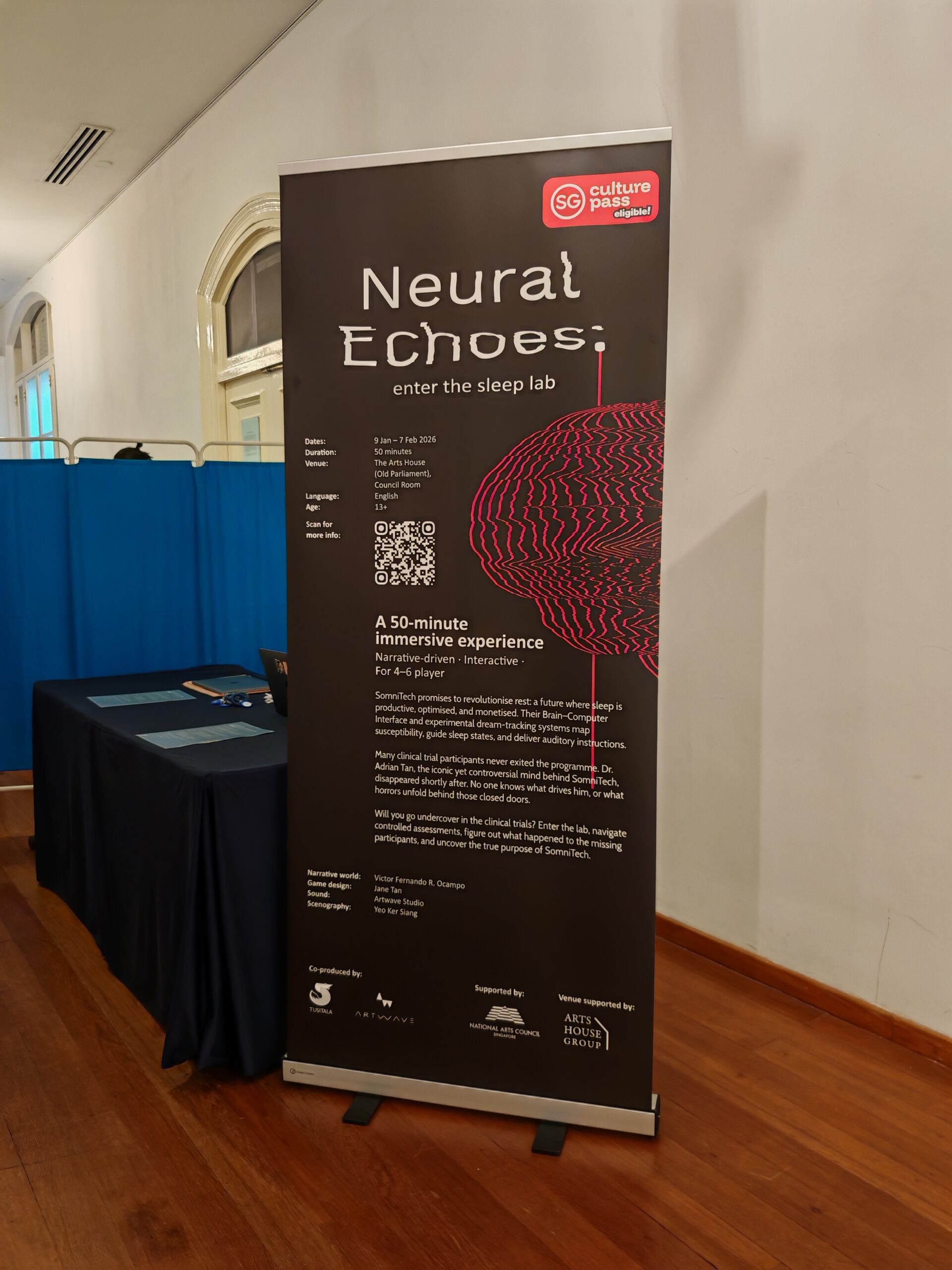
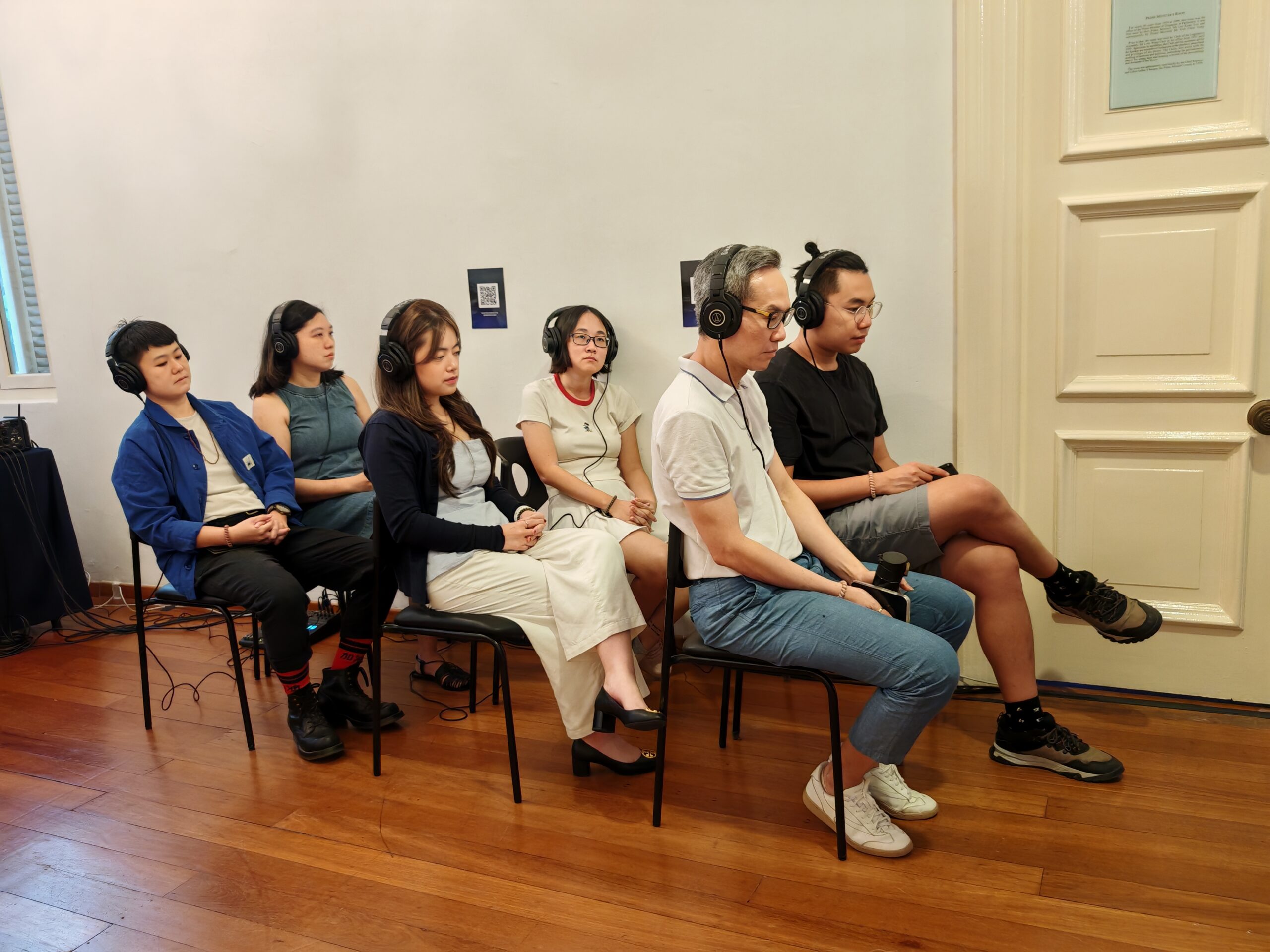
Neural Echoes: Enter the Sleep Lab ran on 9 Jan – 7 Feb 2026 as part of VERSE at Light to Night 2026 of Singapore Art Week at The Arts House, Council Room.
Neural Echoes is a 50-minute immersive theatre experience for 4–6 participants. Set inside a fictional sleep and cognition research facility, the format blends interactive theatre with escape room mechanics, using tasks and sound to move participants through the story.
As participants encounter competing narratives, official reports, system instructions, and fragmented personal accounts, they are asked not only to interpret information, but to deliberate together on a critical decision. Progress is structured to require discussion, negotiation, and attempted consensus under time pressure, emphasising cooperation and shared decision-making.
Through this design, the work uses science fiction as a way of thinking through possible futures, placing participants inside a functioning system with rules, procedures, and consequences. Neural Echoes invites participants to sit with the tensions and trade-offs of possible futures, framing technological decision-making as a collective, social act.
At a glance
- Form: Immersive experience (interactive theatre, escape room)
- Duration: 50 minutes
- Audience: 4–6 participants per session
- Language: English
- Age: Recommended 13+ (themes of death and suicide)
Premise
Audiences enter the space undercover, posing as volunteers in SomniTech’s clinical sleep trials, a programme that promises to revolutionise rest by making sleep productive, optimised, and monetised. Many trial participants never exited the programme, and Dr. Adrian Tan, the principal investigator of SomniTech, has recently disappeared.
Source text and narrative world
Neural Echoes: Enter the Sleep Lab is set within the same speculative narrative world as Victor Fernando R. Ocampo’s interactive fiction The Book of Red Shadows, a play-by-email work presented at the Singapore Writers Festival in 2020.That work imagines a future in which the consciousness of the newly dead are conscripted into a secret government programme, the Red Shadow Project (TRSP), in exchange for a chance to return to life. Participants are required to make irreversible decisions about who lives and dies, intervening in past events to avert future societal collapse.
Neural Echoes functions as a narrative prequel to this world. Within the SomniTech Sleep Lab, sound becomes a primary tool of guiding attention, regulating behaviour, and shaping moments of doubt and compliance.
Process
Narrative and experiential design
The structure of Neural Echoes is shaped by two opposing systems that influence how information and authority are encountered within the lab. One system operates through institutional protocols, research objectives, and cohesive official narratives that frame assimilation as necessary for collective progress. The other introduces disruption through fragmented voices, emotional testimony, and contradictory materials that complicate or undermine that authority.
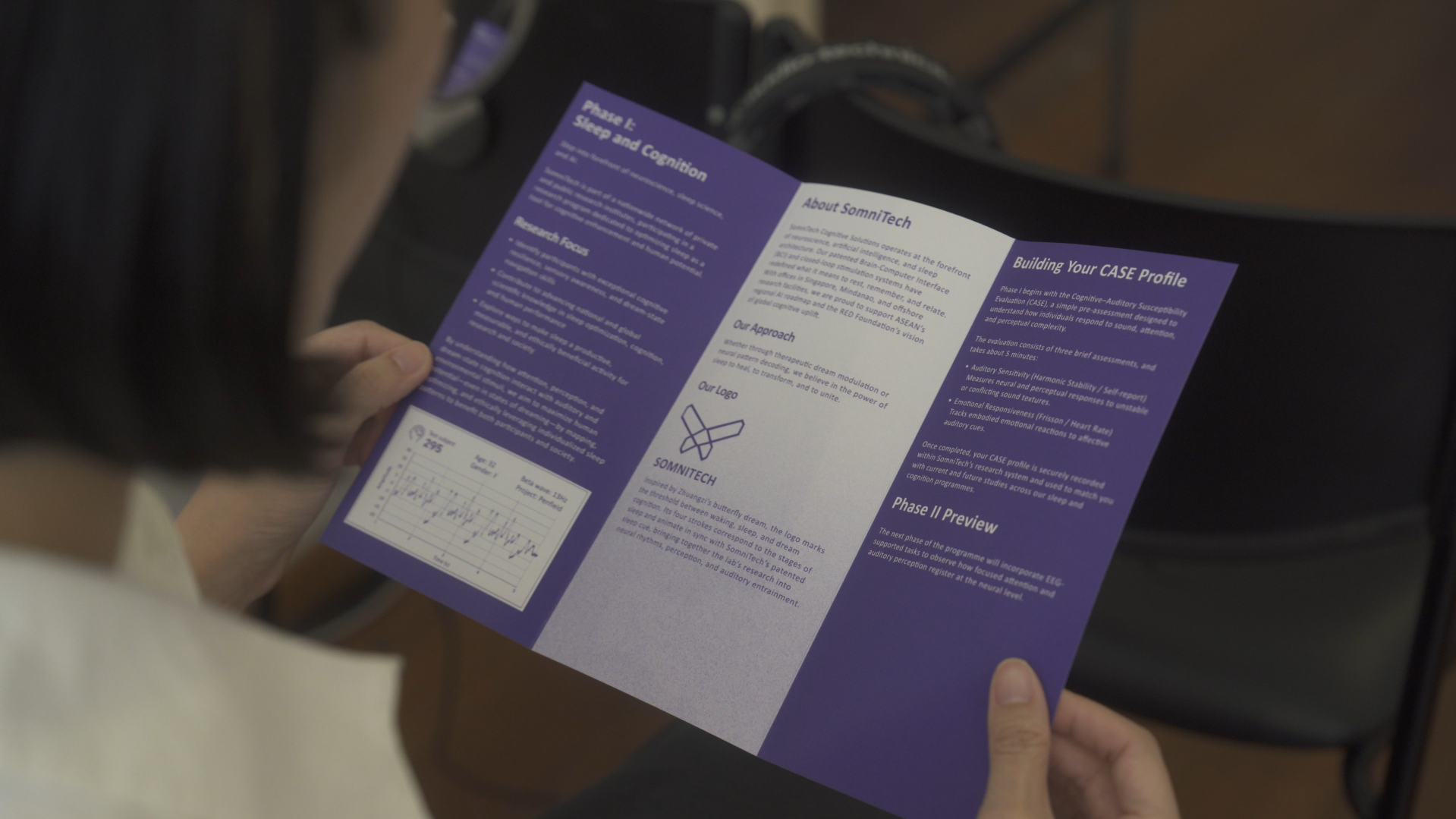
These “order” and “chaos” systems are expressed through spatial and sensory design as well. The environment sits between a research lab and a gallery, with light and sound operating as dramaturgical signals. Visual and symbolic elements, such as the butterfly motif drawn from Zhuangzi’s parable, gesture toward themes of dreaming, perception, and uncertainty. Together, space, sound, and visual cues align with the experience’s central tension between collective good and individual autonomy.
Tasks and information are distributed in ways that require participants to cooperate and share knowledge. No single participant can process all the necessary information, and progress depends on discussion and coordination. The experience culminates in a unanimous group vote, with a secret ending unfolding in the event consensus is not reached.
Game
In pushing traditional puzzle mechanics, Neural Echoes went through rapid prototyping to uncover the best way to translate the source material into an interactive format. The work was designed around two complementary layers: the authored narrative crafted by Victor, and the emergent participant experience that would be lived, interpreted, and shared after the event. Neural Echoes prioritises the latter while creating space for the former through key beats, interactive moments, and puzzle design. Together, these elements allow participants to become active contributors to the experience, exercising meaningful agency within the narrative world.
Sound
Neural Echoes is a sound-led experience and so Artwave was involved in co-designing the work from the start. Their sound design considered environmental sounds and cues that were not just heard, but physically experienced as sensation.
Sound reflected and shaped the participants’ experience: starting with calm meditation, then into panic and discomfort. Audio cues were also influenced by participants’ interactions with tactile objects such as the RFID readers, thermal printers and an alarm-rigged safe. The uneasy ending is reflected in the soundscape, when rougher textures were added to soothing sounding music, which was also detuned and made dissonant.
Scenography
Our scenographer, Yeo Ker Siang, drew inspiration from Terry Gilliam’s Brazil, Gattaca, and Dan Flavin to implement a scene that feels both like a gallery and a game space. The scenography of Neural Echoes had to adapt through each iteration and venue while retaining the atmosphere of the world – for example, switching furniture out for plinths, 3D printing light brackets, and programming light cues. The lighting design supported atmospheric building and tension, effectively reflecting and shaping the participants’ progression and emotional states through the experience.
Interactive Elements
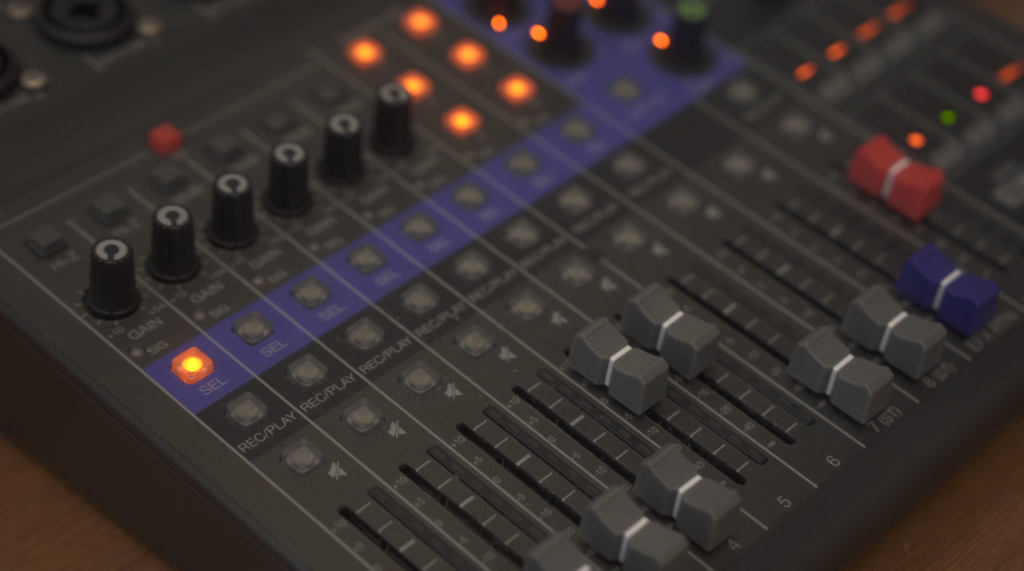
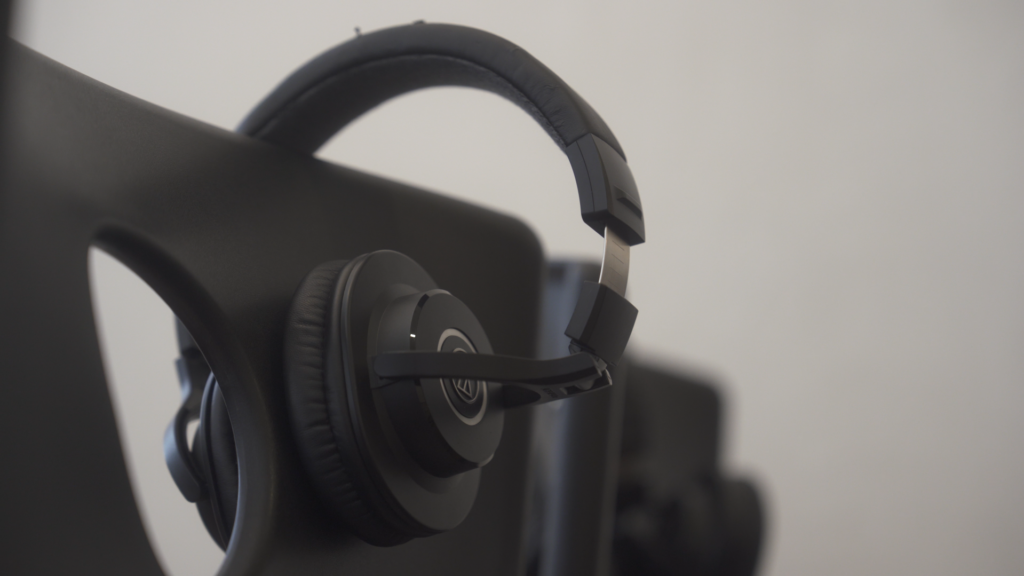
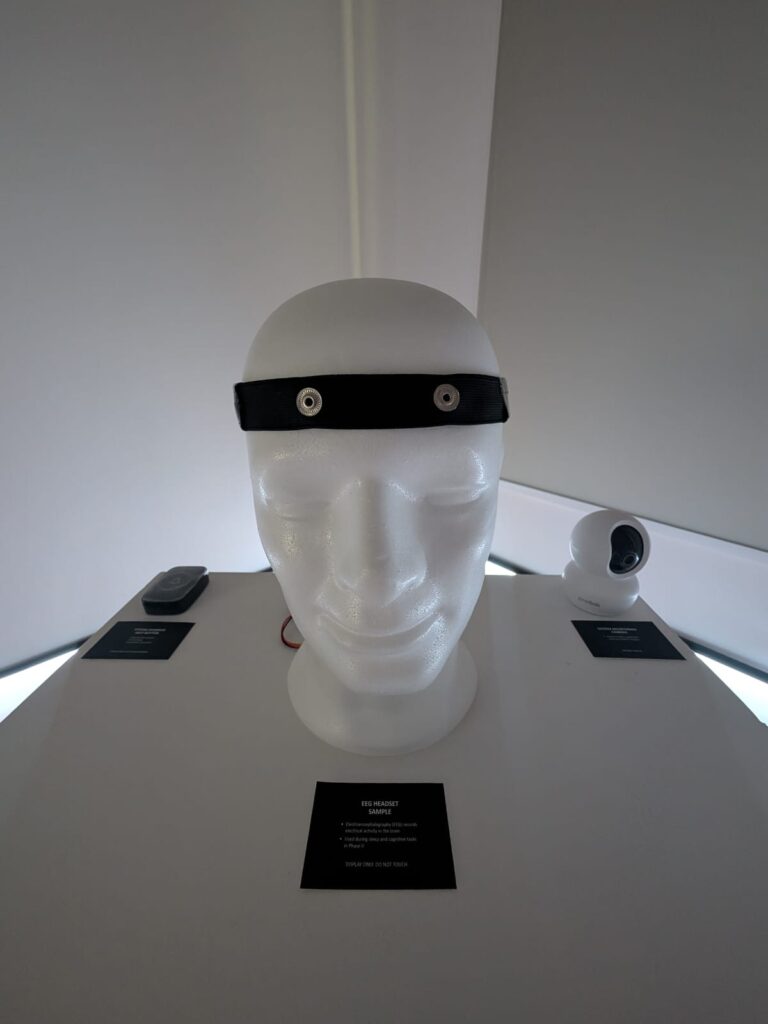
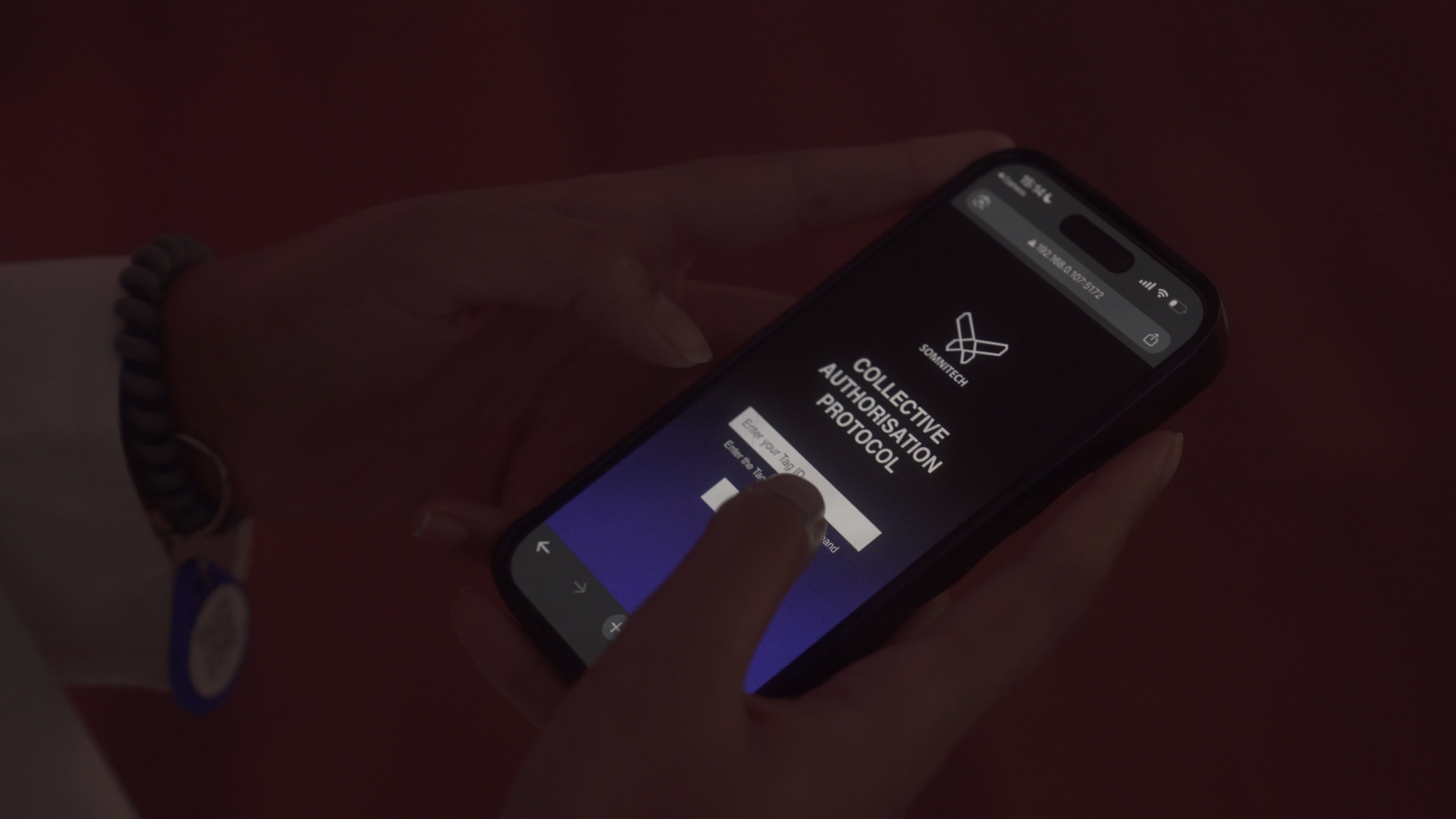
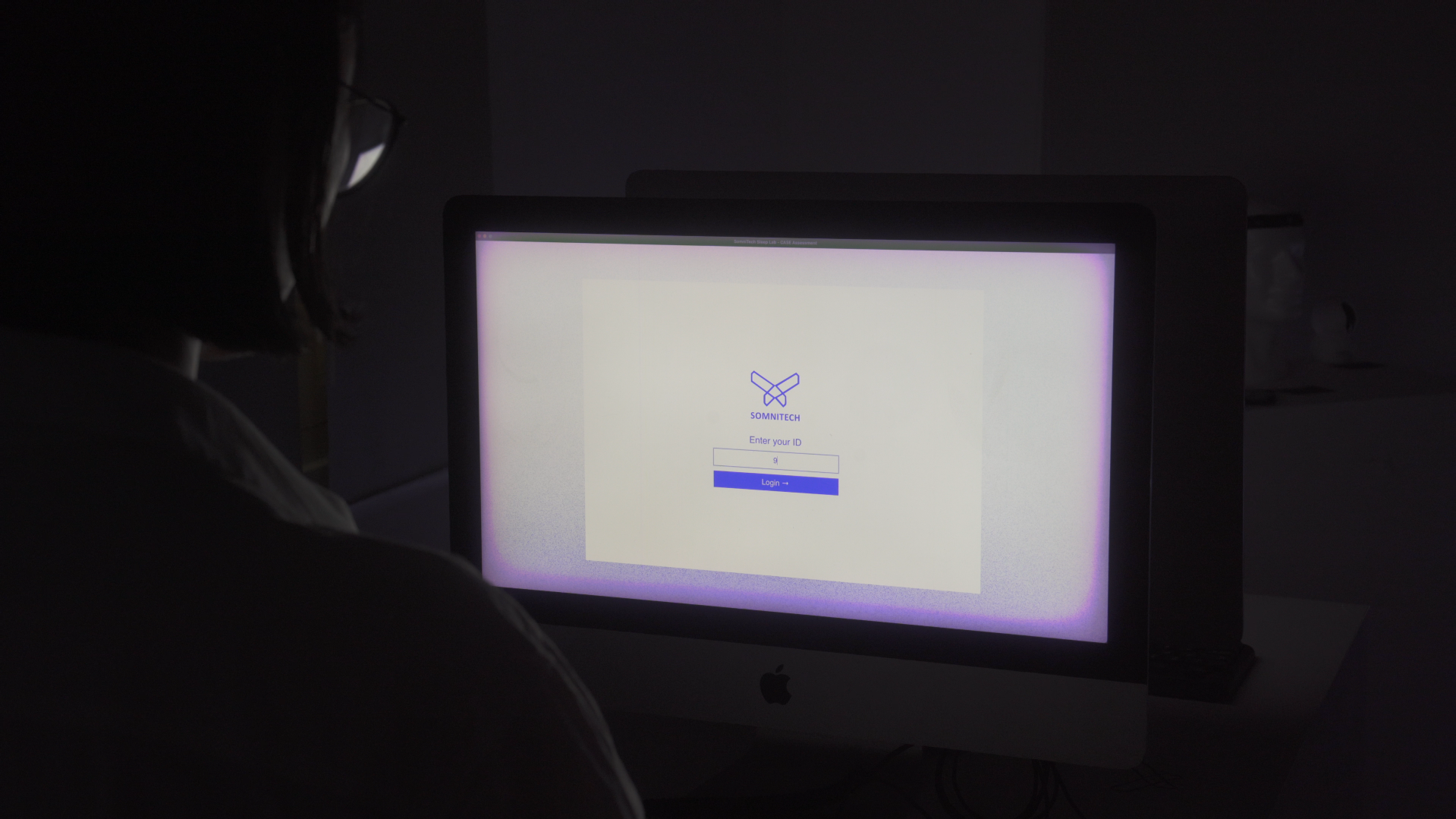
The show’s interactivity relies on a combination of networked computer terminals, NFC-enabled artefacts, projected text, thermal-printed outputs, QR codes, and QLab-controlled sound and lighting systems. These elements are carefully programmed to support narrative progression and collective decision-making, reinforcing the work’s interest in how technological infrastructures mediate trust, compliance, and agency.
Set and Playtest
Neural Echoes is designed for audiences interested in immersive theatre, speculative fiction, and art–technology experiences, while remaining accessible to first-time immersive participants. The work particularly appeals to novelty-driven younger audiences interested in shared, physical experiences.
The small-group structure encourages conversation and negotiation throughout the experience, making it well suited to audiences who enjoy collaborative problem-solving and collective decision-making. While the tone is approachable and engaging, the narrative engages themes of AI, consent, productivity, and the optimisation of sleep and cognition, allowing participants to encounter these ideas through play.
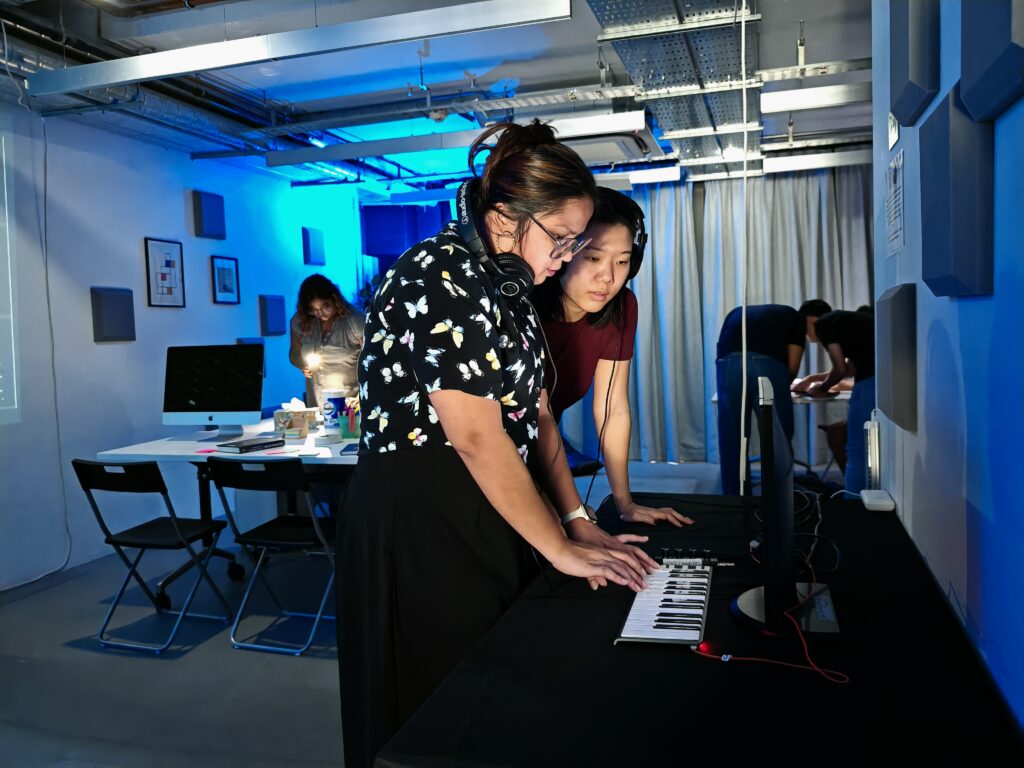
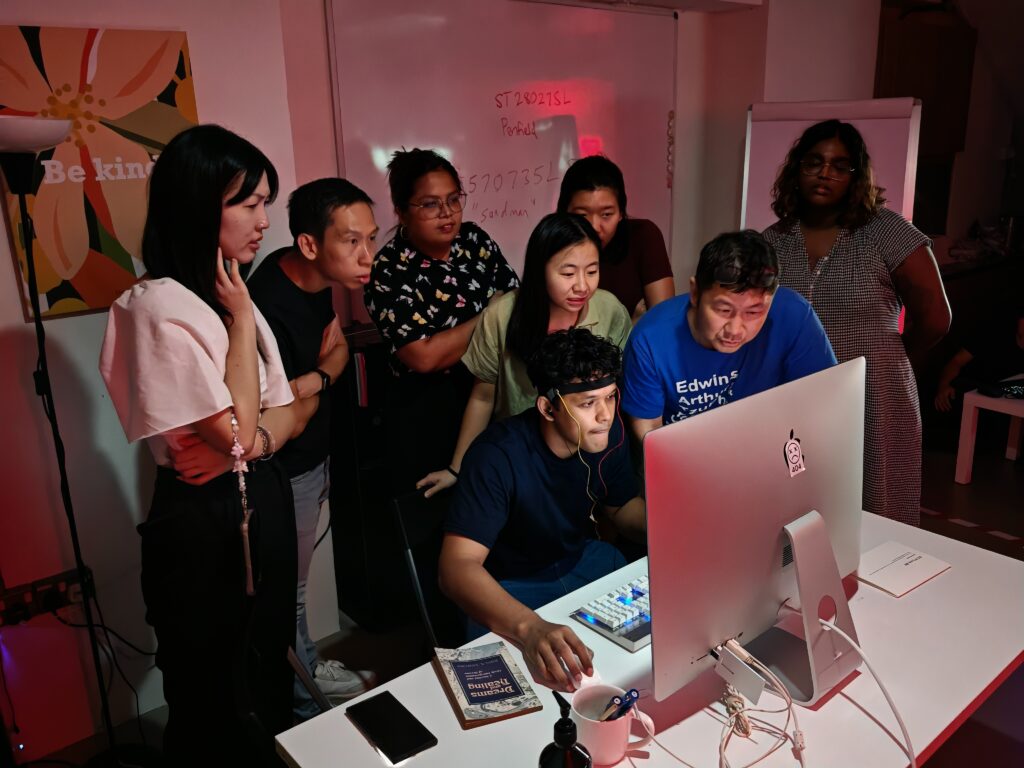
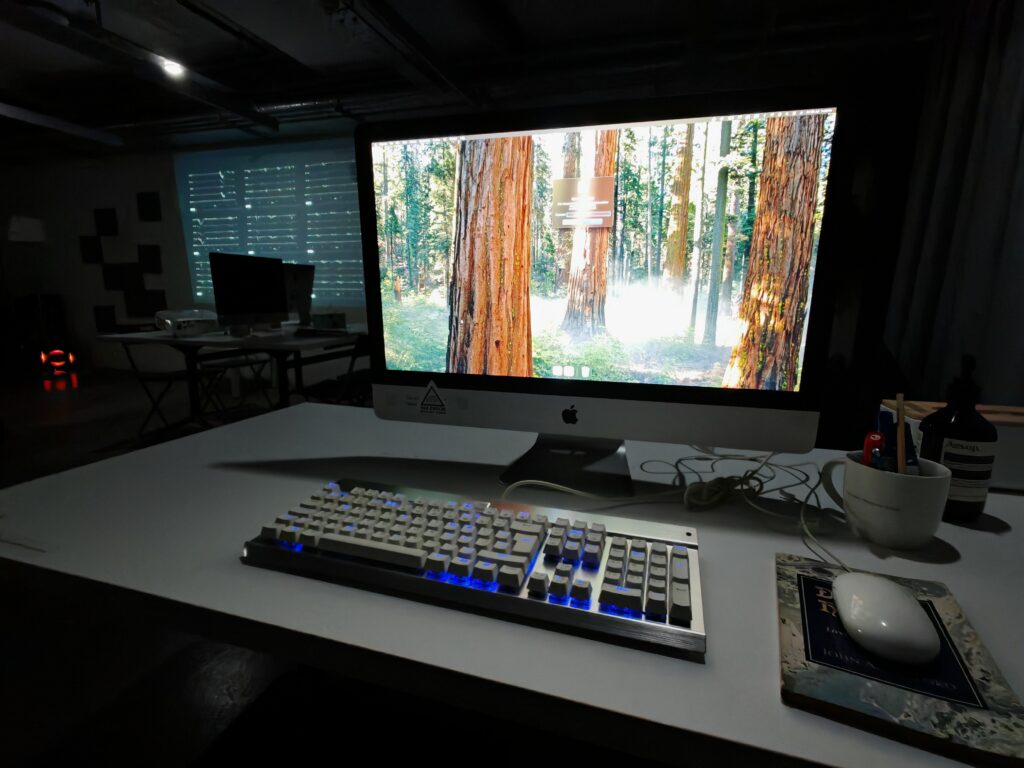
(Above: Photos from playtests)
Three rounds of playtesting were conducted across July, September, and December, each treated as a structured research session. Every round comprised four sessions of six to eight participants, with a fresh cohort recruited for each round, ensuring a wider range of first-time perspectives across each iteration. Observations were documented in real time — capturing participant expressions, interaction patterns, and behavioural responses at key narrative touchpoints. Following each session, qualitative feedback was gathered through response forms and facilitated group discussions. The team then entered a reflect-and-iterate cycle, synthesising findings to identify friction points, unmet expectations, and moments of delight, informing design decisions for the next iteration.
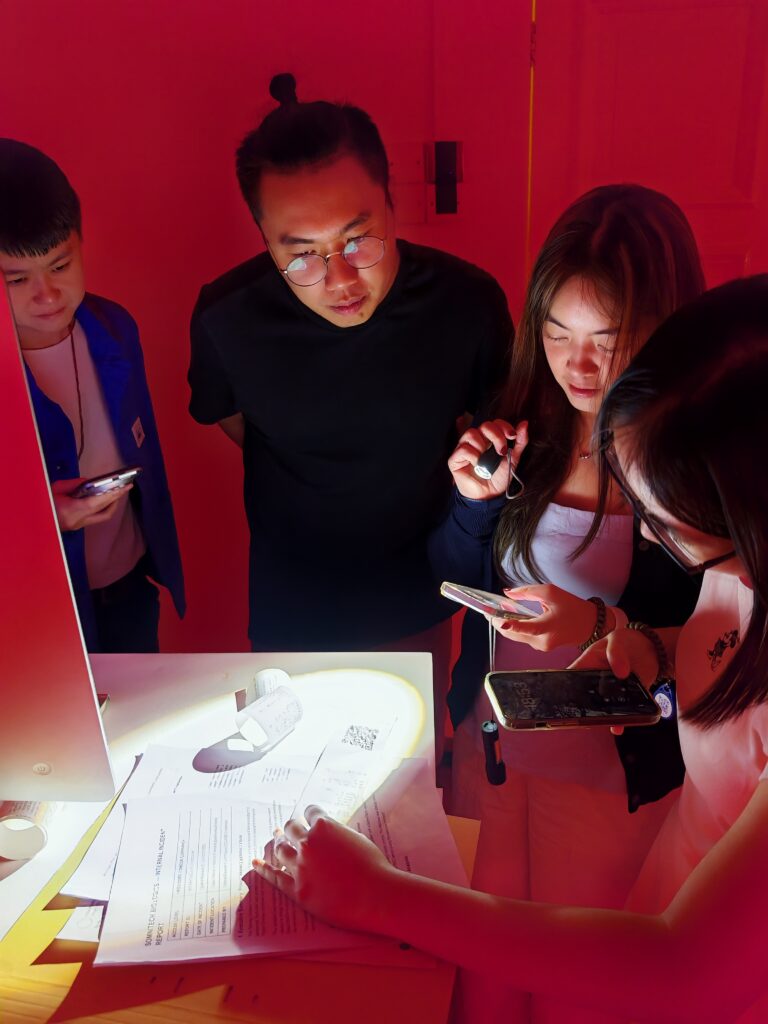
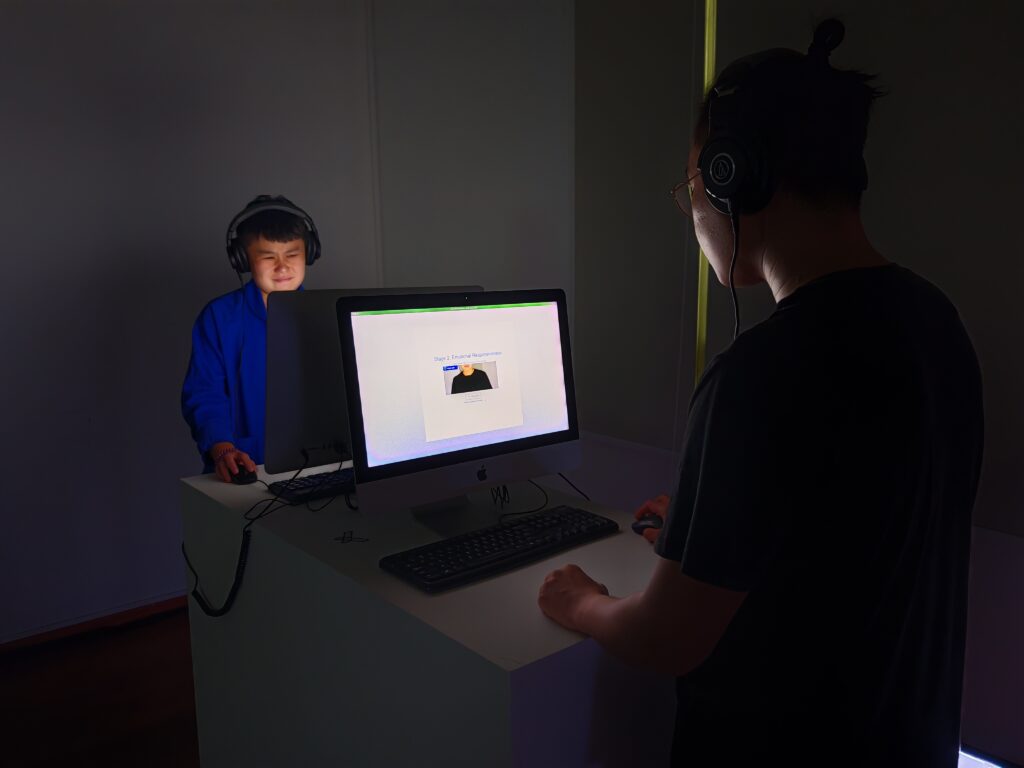
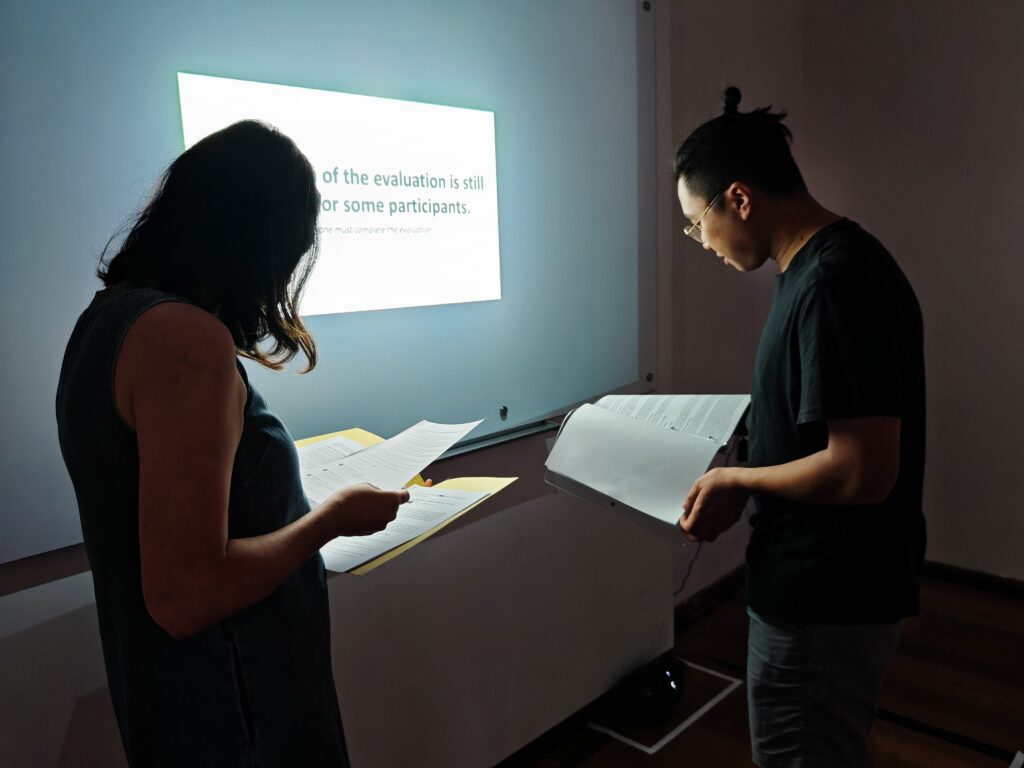
(Above: Photos from Neural Echoes: Enter The Sleep Lab at The Arts House, Council Room)
A note
The work is suitable for festivals and institutions programming participatory formats that prioritise audience agency, contemporary technological themes, and socially embedded experiences. Neural Echoes: Enter the Sleep Lab can be presented as a standalone immersive experience, within festival contexts, or alongside public programmes such as artist talks, panels, or workshops.
About the team
Co-Producers:
Tusitala is a Singapore-based digital storytelling studio that creates novel literary experiences. They produce interactive, meaningful projects that reimagine the future of reading at the intersection of art and technology.
Artwave Studio amplifies emergent voices, issues, and writing. With expertise in creative writing, voiceover, sound design, and music, Artwave provides consultancy and production services for audio-first experiences. Their project partners range from environmental to cultural sectors, including The Climate Cheesecake Podcast and Centre 42.
Creatives:
Narrative world: Victor Fernando R. Ocampo
Game design: Jane Tan
Sound: Artwave Studio
Scenography: Yeo Ker Siang
Voiceover: Fahim Murshed, Benjamin Chow
Supported by