written by: Christine, Foler & Vaibhav
An introduction by Christine Chong, Tusitala Company Head
As an arts worker, I’m deeply interested in Korea’s arts and culture scene, which I consider inventive, accessible, and particularly adept at blending fine art and everyday culture – take, for example, concept-driven retail and art spaces like Haus Nowhere. This success is no happy accident. After the 1998 economic crisis, the Korean government made a sustained, strategic investment in the arts, building institutions, residencies, and the broader ecosystem that supports creative practice. Decades of commitment have paid off; we see now the popularity of K-dramas, the global influence of K-pop stars like BTS, and Han Kang winning the 2024 Nobel Prize in Literature.
For me, travel is a great way for the team to see how different countries, institutions, platforms, and artists interpret “media art” and “art and technology”. In Singapore, as in any national or institutional context, the work we encounter is often shaped by assumptions about what counts as legitimate or “serious” practice. Personally, I’m not interested in arriving at a single definition of ‘media art’ or ‘art and technology’, but in checking out the diversity of practices already unfolding elsewhere.
Compared with Ars Electronica – which is more a festival format, open, eclectic, loosely curated, and event-driven – the Seoul Mediacity Biennale offered a precise curatorial lens, focusing deeply on themes, methods, and historical context. Séance: Technology of the Spirit explored how occult, mystical, and spiritual traditions can operate as alternative technologies, resisting the rationalistic and accelerationist logics of capitalist modernity.
Where SMB excelled was in its concept and historical approach; its curatorial focus on spiritual practices as technology is razor sharp. One striking example of that boldness is their provocative Colour Manifesto: “Color is not secondary. We reject the assumption that color is supplementary, decorative, or merely aesthetic. In this exhibition, color is foundational.” The writing was bold, direct, and accessible. And in the final room, one passage sent a chill down my spine: “Nearly a third of the artists in this exhibition are dead. And yet their presence can still be felt. They are in the room with you right now.”
Yet the Biennale’s definition of “media” and “technology” felt conservative. Video works predominated, with only a single robotic piece – which was my favourite. I found myself wishing for more ‘new’ media works, and for artists engaging with contemporary technologies and experimental tools.
💬Christine reflects on
Opening Blooming from the center; Golden Flower of Potential – Byungjun Kwon (2025)
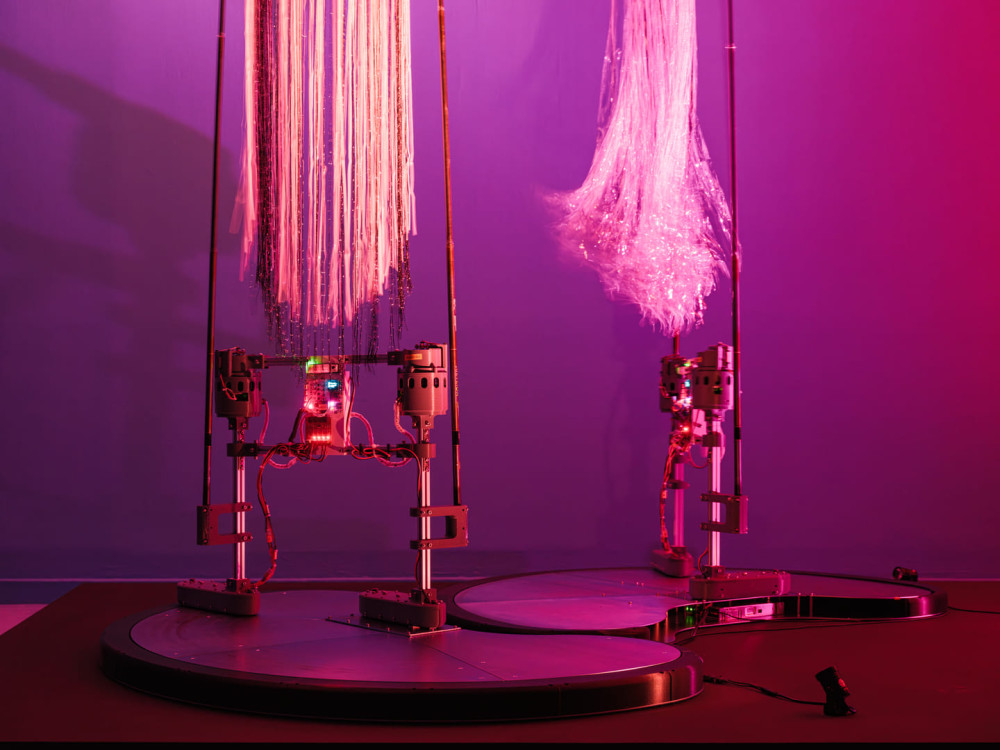
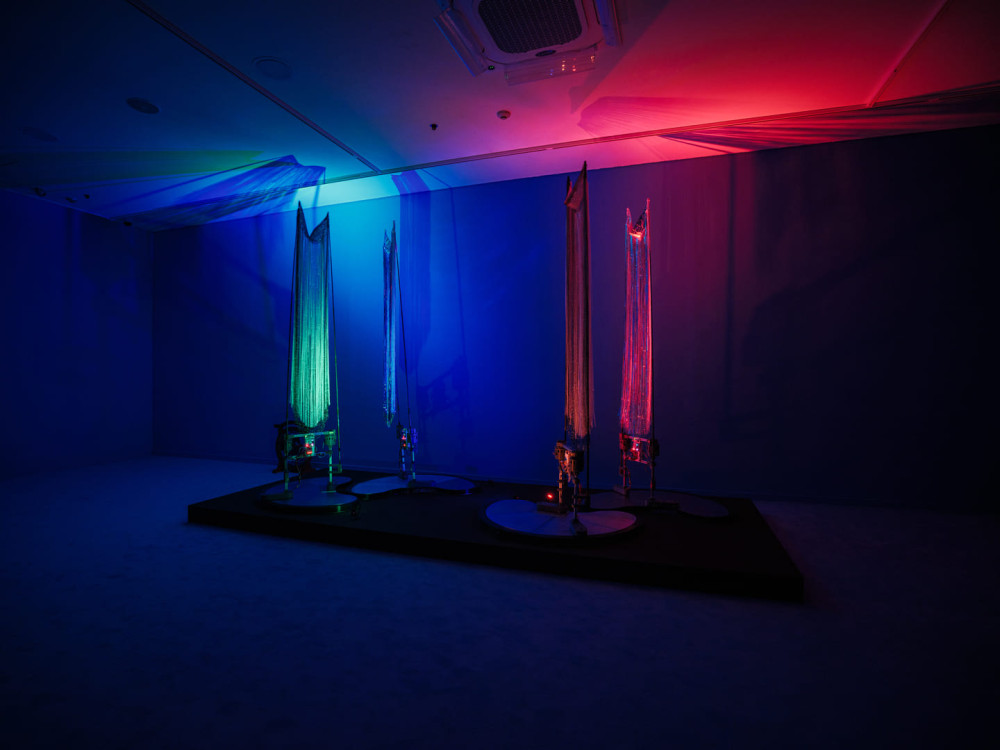
Photo Credits: Seoul Mediacity Biennale website
This new work takes its title from the concept of self-discovery and enlightenment as described in the ancient Taoist text The Secret of the Golden Flower. At the core of the artist’s interpretation of the myth are thirteen shamans who mediate between heaven and earth, translating the words of the gods into messages that can be understood by humans, and vice versa. As the inventors of alphabets, their rituals release uncertainty, ambiguity, and supernatural belief into the world.
Honestly, I had no idea what I was looking at at first, but I was completely hooked. A dark room. A gong. Four robot shamans performing a ritual together, each with a different instrument, their steps creating a strong rhythm. The theatricality was mesmerizing: tassels shimmered with every movement, lights flashed, and shadows danced across the walls. The combination of rhythm, movement, and the distinctive cadence of Korean shamanic music drew me in completely—it was visual, auditory, and hypnotic. I watched it twice.
As I watched, I wondered: wouldn’t it be more efficient if all shamans were robots? They could dance for hours without tiring, learn the steps instantly, and never risk bodily harm. Yet the visible form of a ritual – the steps, rhythm, and sensory cues that robots can flawlessly reproduce – is merely a medium for what is more important and essentially invisible: the conviction, agency and spiritual power of the petitioner. Without that, isn’t ritual just choreography? Can we ever really outsource the labour of ritual to robots?
(This stood out especially because we had earlier worked on the Talisman project where we also explored writing as a type of spiritual mediation.)
💬 Foler: I regret not staying longer to watch the robots perform.
💬 Vaibhav: This was my favourite artwork. I loved how the robots were performing and how every piece of hardware worked together perfectly to create the rhythm. It felt like watching engineering and ritual merge into one moment.
💬 Foler reflects on
HEXEN 5.0 – Suzanne Treister (2023–2025), Seoul Museum of Art
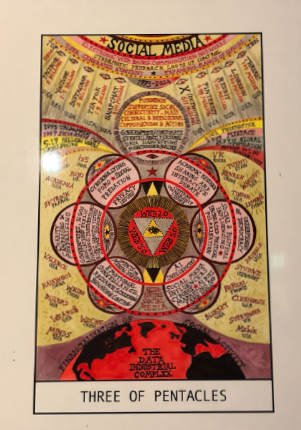
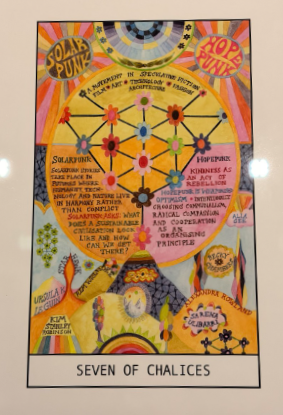
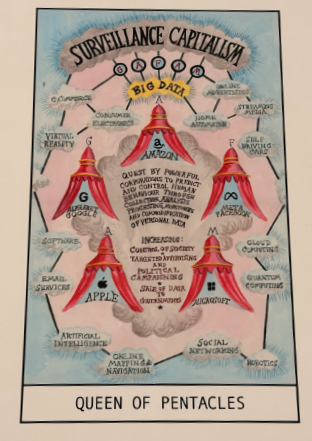
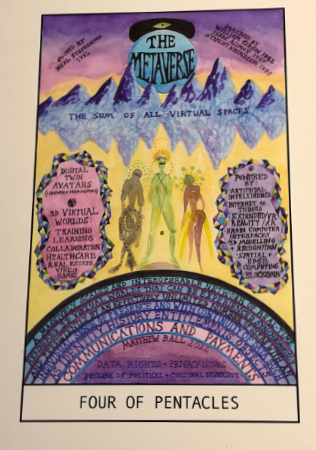
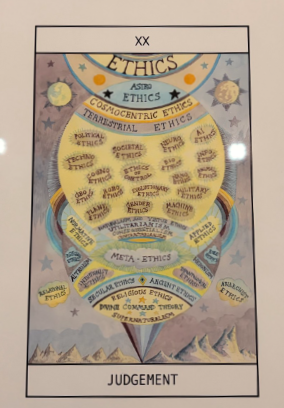
HEXEN 5.0 comprises 78 watercolours based on the tarot – also published as a deck of cards. Based on ancient alchemical drawings, they extend a tradition in which science, art, and spirituality are inseparable from one another. Collectively they present a holistic approach to the systemic crises that are threatening life on earth, crises that cannot adequately be addressed by any branch of knowledge that excludes all others.
Treister’s update of the tarot recognises that every divinatory system depends upon an accurate diagnosis of the present. By making connections between new forms of communication and the changing organisation of corporate and state power, environmental adaptation and innovations in science-fiction, and countless other fields of inquiry, the artist encourages her audience to reflect upon the factors shaping the world today and speculate on the means by which we might secure an ethical, sustainable future.
What resonated most was the sheer amount of research she must have done to come up with a full set of tarot cards reflecting the current world situation. What I like about HEXEN 5.0 is how Treister uses storytelling to talk about tech and the world today, without needing any tech in the artwork itself. She turns her research into something visual and easy to connect with. That feels close to what we do at Tusitala – using different ways of telling stories to make complex ideas feel understandable and human. It’s a good reminder that you don’t always need fancy tools; sometimes a thoughtful narrative is enough.
💬 Vaibhav: The tarot deck was interesting and unique – each card felt like a small system. It made me think about how I should explain tech problems to people through stories.
💬 Christine: I spent a lot of time on this work also, because I liked the alchemical, new agey visuals fascinating and have a soft interest in tarot cards. A lot of the cards also featured writers I admire (e.g., Ursula Le Guin, Liu Cixin, Donna Haraway, etc.) and complex concepts presented very systematically, almost like an infographic (e.g., Hopepunk and Solarpunk, Quantum Futures, AI, etc.).
💬 Vaibhav reflects on
Evaporating Symphony – Wing Po So, Seoul Museum of Art
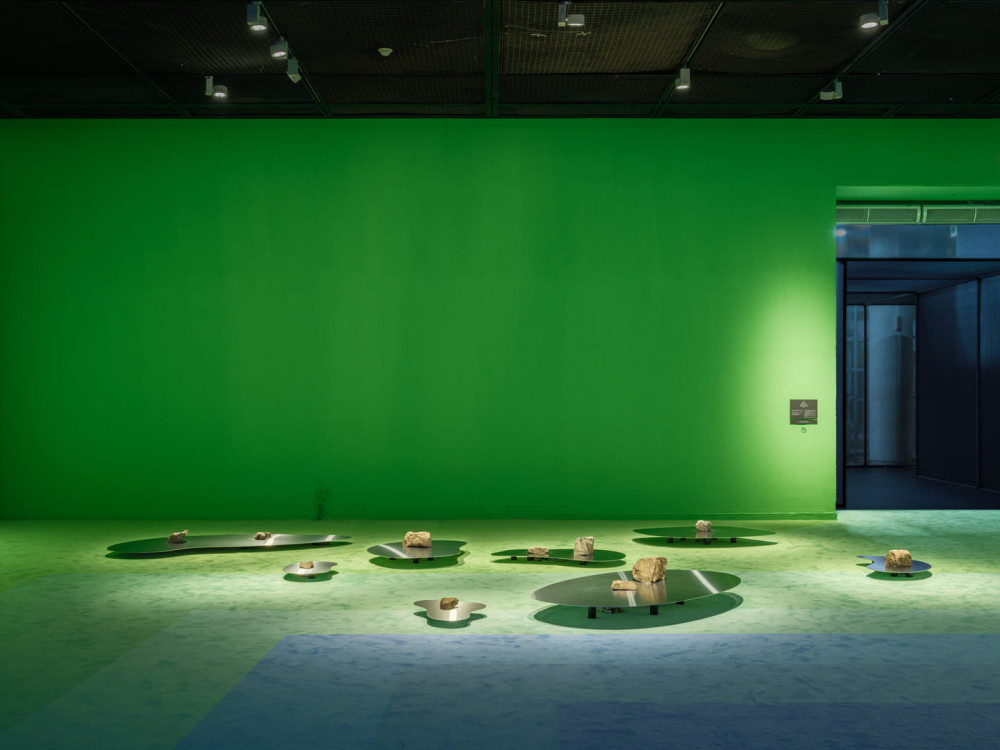
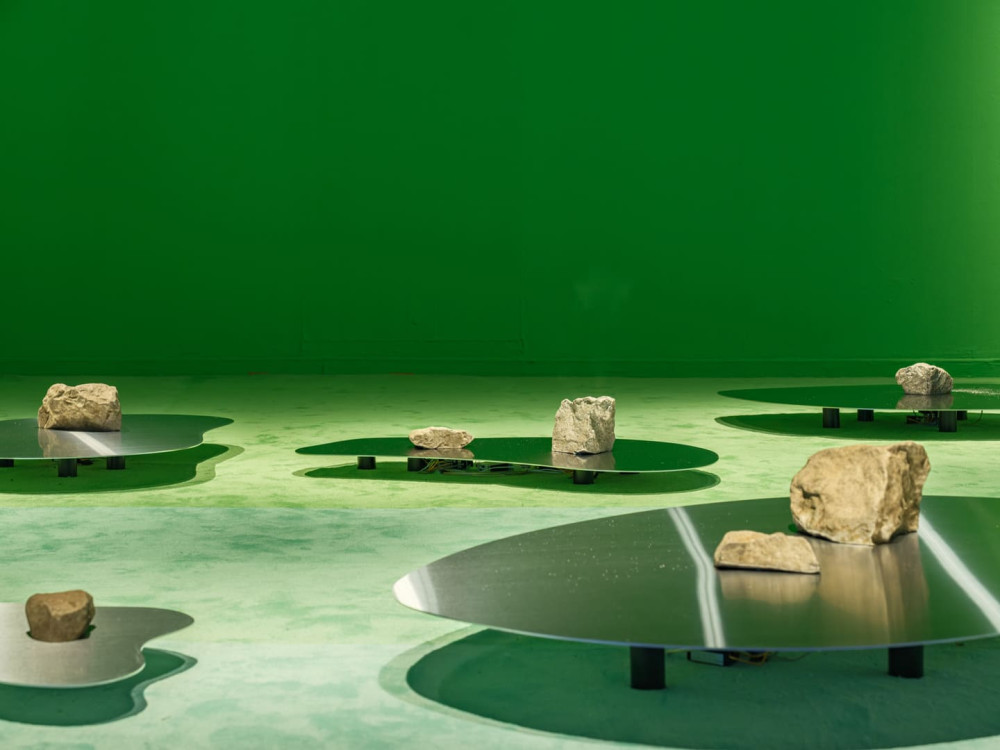
Photo Credits: Seoul Mediacity Biennale website
Evaporating Symphony is an installation where small drops of water fall onto 3D-printed metal stones placed on shiny steel panels. The moment the water touches the stone, it evaporates instantly because of the heat built into the structure. Each droplet makes a soft sound as it disappears, creating a slow, gentle rhythm. The whole setup uses simple tools – heat, metal, sensors, and water – to create something calm and surprising.
What I liked most was how small everything was. A tiny drop of water, gone in an instant, yet it felt meaningful. I stayed longer than I expected, waiting and listening. It reminded me that not all technology needs to be high tech (if that makes sense lol). This work was simple, quiet, and very intentional. The way the water evaporated felt almost alive, like the piece was breathing.
At Tusitala, I often work with software and web experiences, so I usually think of technology as something fast, efficient, and built for interaction. But this artwork reminded me that storytelling can also be slow and quiet. As a developer, it made me think about creating moments that invite people to pause instead of react. In our projects, maybe we can explore stories that unfold through small changes, gentle signals, instead of relying only on big interactions or heavy tech.
💬 Christine: My first thought when I saw the work was “zzz, what is this?” I half turned away, but stopped when I heard a very soft “sss”. After that I just moved around the work, guided by the sound of the sizzle, to watch the magical and somewhat dramatically quick evaporation of the droplet.
💬 Foler: I liked this too. At first glance, it looks like rocks on display. Only when you stop and pay attention, you will hear droplets of water followed by soft sizzling sounds. When you look closer, you will notice the beauty of the artwork as water droplets drip from the ceiling onto the stones and evaporate. It makes people slow down and enjoy the process. It requires some observation skills; if not, you might miss this artwork.
Closing Reflections
Looking back at what each of us chose, something keeps surfacing. Robot shamans, hand-painted tarot cards, evaporating water – none of these are works that dazzle through technical spectacle. What they share is intention: each one asks you to bring something to it, and gives you space to think.
The robots were technically impressive, but the question they raised was a human one – about conviction, about whether ritual means anything without the person inside it. The tarot cards didn’t need a screen to map the complexity of the world. The water just fell, and disappeared, and somehow that was enough.
Seoul Mediacity Biennale also reminded us that the definition of “media art” is always contested. Here, it stretched back centuries – to shamanic traditions, alchemical drawings, Taoist texts – and sat comfortably alongside contemporary robotics and installation. While we did wish overall there were more “high” tech works, the show provided a different perspective and was very well curated.
What we’re bringing back to Tusitala is harder to name than a list of ideas or techniques. It’s more like a recalibration – toward slowness, toward narrative as a technology in its own right, toward trusting that a thoughtful question, patiently held, can do more than a flashy interface.
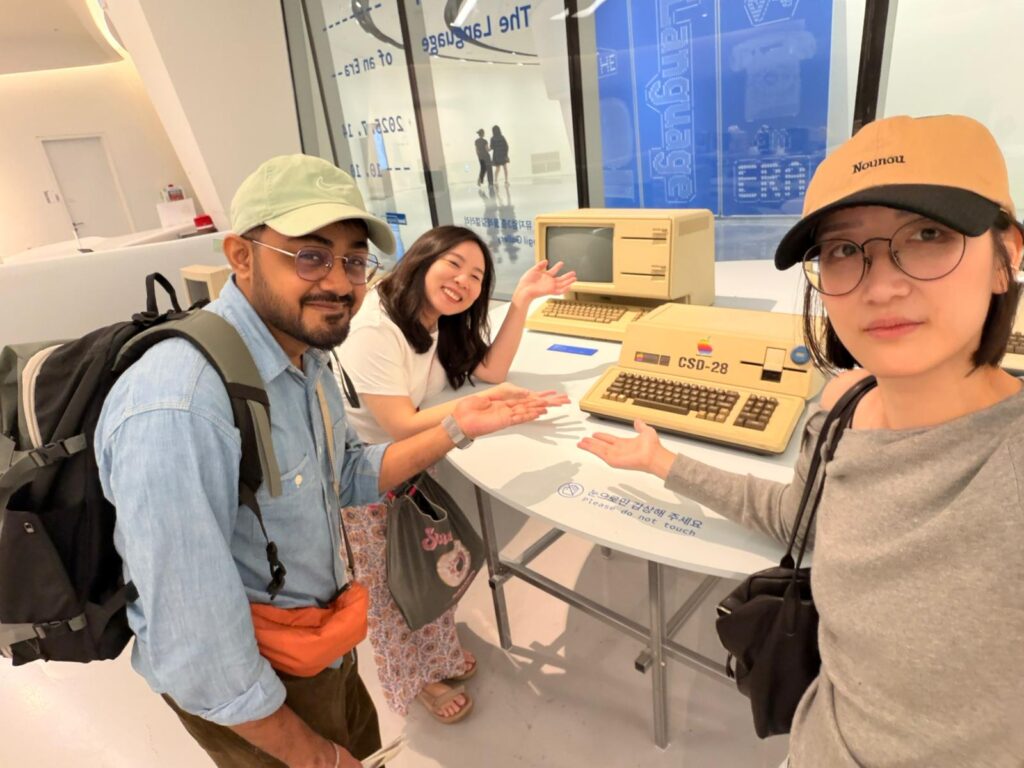
[Tusitala team members have an annual team learning fund, and we decided to spend it together on a research trip to Korea, visiting Seoul Mediacity Biennale (SMB) alongside other spaces and exhibitions like the Nam Jun Paik Art Centre, James Turrell’s The Return, To Breatheby Kimsooja, Lee Buland Time Zone Protocols by Black Quantum Futurismat Leeum. After our trip, I extended to see MMCA’s 2025 Korea Art Prize exhibition, and went to Gwangju to see GMAP’s Sensory Milieu and Gwangju Design Biennaleand Ryoji Ikeda in ACC.]